Showing posts with label cryptozoology. Show all posts

Tuesday, June 29, 2021

Crypto-Kid Radio Show Episode 3: Chad Lewis - Wendigo

 Last night I was joined by my friend Chad Lewis to discuss his research into the mythology and history of the Wendigo.


If you missed the show last night, you can listen to the archived show here.

You can find more info about the radio network I am on here.

You can find more info about Chad here.

You can purchase Chad's book we discussed titled Wendigo Lore: Monsters, Myths, and Madness here 

To interact with me and participate in the weekly after show immediately following the airing of my radio show, you can join the Cryptozoology Discord Server.

I am off next week, but on July 12th I am back and am joined by David Goudsward to discuss sea monsters of the Caribbean. 


Thursday, June 3, 2021

The Changing Perspectives of Cryptozoology Part 4: Brian Parsons

    For years, I have been fascinated in the evolution of cryptozoological thought. There are clear fractures happening in the field, but I don't really see a ton of discussion about it in public. Yet, I have had plenty of personal conversations with a variety of researchers about the changes. So, I decided it would be valuable to the field to ask a variety of researchers, all with different approaches and expertise, the same five questions about the field today. Hopefully, the differences in answers will be valuable information on the diversity of thought in the field.
    My last interview was with writer Sharon Hill and you can read it here. For this interview, I talked to my good friend Brian Parsons. 
    Brian is an Ohio cryptozoologist and paranormal investigator. He has written an excellent series of books on the investigation into the unexplained and hosts the best paranormal news radio show the Paranormal News Insider. He can be found at this link
1. What is cryptozoology as you see it?
    Brian: Avoiding the standard definitions, I see cryptozoology as a set of beliefs in creatures that defy logic, scientific support, or possibility of existing in nature. Many times, cryptozoology is defined using “the search or study of” based on the “ology”, but I feel the strongest aspect is the belief in not just the creatures themselves but also the fact that they could exist despite the overwhelming data against it. Folklore plays a big part in the creatures associated with cryptozoology and folklore depends on belief for survival and not on physical evidence at all. In fact, I feel the lack of evidence fuels the folklore even more and secures more interested parties into attempting to “discover” these creatures that are so elusive (since they often live in the beliefs of the hopeless romantics who seek them). 
    This might seem skeptical, but it is hard to believe in many of the creatures associated with cryptozoology existing in nature when you set aside the logical fallacies that skew the judgment of researchers and field investigators alike. What is even more difficult is to not be a complete skeptic or true believer. Creating a balance in belief is not easy, but a perfect balance should still weigh closer on the skeptical side to help escape many of the things that has held the topic back such as being unscientific, surviving on speculation, and having a lack of objective evidence to support the claims of witnesses. 
2. Where do you think cryptozoology is headed in the next few years?
    Brian: Cryptozoology will continue to evolve based on the creatures that are most popular within it. Bigfoot continues to be the primary driver since varieties of this creature are said to exist on many continents and the creature is easily identifiable by most of the public. Belief in the possibilities of such creatures will not diminish despite the continued lack of evidence and the increase in the technology and use of drones, camera, video technology, etc. In many cases personal accounts (even when they lack evidence or credibility) as well as ambiguous photos, videos, or audio evidence will continue to fuel the belief engine that drives cryptozoology. 
    Example: The Loch Ness Monster is currently seeing decades of popularity despite a lack of evidence as well as the Otago University DNA research project which did not find DNA to support any large creature in the loch. Nessie and other creatures associated with cryptozoology will continue to fuel interest if anecdotal accounts continue to flow in. My prediction could include the “next big thing” will be more flamboyant than a flying humanoid or a Sasquatch/werewolf hybrid and will create a sub-sect of researchers who are “experts” in that arena and maybe even a conference or two (and keep an eye out to see who can publish a book first)! Kidding aside, but cryptozoology is seeing a high popularity probably due to many ghost groups getting bored as well as the distraction of fantasy. I would, however, expect to see many flee this pursuit to investigate the UFO field in the next few years as this topic continues to get worldwide mainstream news attention.
3. Who do you think (living or deceased) has had the biggest impact on the state of cryptozoology in today's world?
    Brian: This is a tough question since cryptozoology has relied on many different people to give it life to those who have helped give it shape over the years. While one can (and should) easily point to either Ivan Sanderson or Bernard Heuvelmans for creating a foundation for cryptozoology one could question who influenced them. Sanderson himself was a follower of Charles Fort who really deserves the credit for creating interest in all things paranormal and challenging many to think outside the scientific boundaries.  
4. What, if any, have been cryptozoology's biggest contributions to modern science?
    Brian: Cryptozoology and science are not exactly bedfellows. Cryptozoology itself is founded on belief and folklore and is considered pseudoscientific since it does not rely on the scientific method. Again, cryptozoology is cemented in belief and the folklore that perpetuates that belief. Many cryptozoologists talk about the coelacanth, giant squid, megamouth shark, okapi, and other creatures that used to exist only in folklore. The problem is scientists (people funded by organizations for scientific research) were the ones who documented these findings and thus took the credit for them, not cryptozoologists, although they have been adopted into cryptozoology lore.  
    The contribution here is that part of cryptozoology gives hope to the flesh and blood creatures that should be extinct and hopefully gives someone motivation to go out and rediscover them or not give up on a creature such as the thylacine or ivory billed woodpecker since they might become the next Laotian rock rat (related to a family of rodents thought extinct for 11 million years rediscovered in 2005) or the aforementioned coelacanth (order of fish that was thought to be extinct for over 65 million years). Every discovery of animals that are thought extinct gives hope, although not credibility, for the more outlandish cryptids to be discovered. 
    My hope is that like an interest in airplanes might lead someone to being an astronaut, an interest in planets might lead them to being an astronomer or physicist, a person interested in cryptids might lead them to being a biologist or zoologist. Animal educating celebrities are fewer than famous physicists these days. Gone are Steve Irwin who was made fun of due to his accent although he pulled more people into the world of animals than anyone. Jack Hanna recently left the Columbus Zoo and public life due to personal illness and all we really have left is Jeff Corwin, Jane Goodall who turned 87 this year, and a few other minor influences. Cryptozoology might be a good enough gateway to get young people interested in animals enough that they want to pursue a legitimate career in helping or helping to understand animals or other aspects of nature.
5. Why do you think that paranormal and ufological subjects have been gaining traction within the field of cryptozoology?
    Brian: Interestingly, my personal pursuit of cryptozoology and UFOs came from research I was doing on extra sensory perception while working primarily in the ghost field. In my opinion we are seeing the continuation of a shift in cryptozoology from belief in Lazarus taxon and longstanding regional folklore to more incredible creatures that defy biology or physics in their makeup. We have gone from Bigfoot (and the many other varieties) and the Loch Ness Monster (and other folkloric lake and ocean monsters) to one-off monsters like Chupacabra, Mothman, dogman, and many other modern day boogeyman stories that have created a loyal following of believers and instant folklore.
    Belief in the more incredible creatures has also laid the foundation for more incredible claims to accompany them. The Bigfoot being an alien hypothesis has been around for decades (see Stan Gordon, Jon-Erik Beckjord, and John Keel for starters). While this camp has been in the minority it gained a lot of traction about ten years ago and even led to an episode of Ancient Aliens being dedicated to the topic which has now made it a popular opinion to many.
    On the flipside of this UFO researchers have included creatures in their witness description lineups since the early days of research. A few decades ago, ghost investigators, cryptozoologists, and Ufologists wouldn’t be caught in the same room together. Now, many of these groups have adopted pursuits in two or all three of the anomalous fields and have also blended techniques and beliefs together at the same time. This cultural shift has also influenced witness testimony which has further solidified the new folklore of every cryptid potentially being a ghost or alien creature hopping from other worlds or dimensions to elude humans on Earth. 
    This could also potentially be influenced by the current rise in comic book culture. Those in the UFO field also know how heavy of an influence comic book culture has been on their field going back to the beginnings of comics (John Carter of Mars, Buck Rogers Flash Gordon, Superman, etc.). Of course, books and movies helped shape the culture of belief in aliens making their way to Earth and we are amid a widespread belief in aliens today thanks in part to movies and television and the current U.S. government’s interest in UAPs. About 40% of the top grossing movies of all time involve aliens as part of their content (although most are part of the MCU, DCEU, Star Wars, and Transformers franchises). We could even point at shows like the X-Files for blending these topics together as well. The once three separate fields have been slowly melting together for decades due to pop culture and belief.


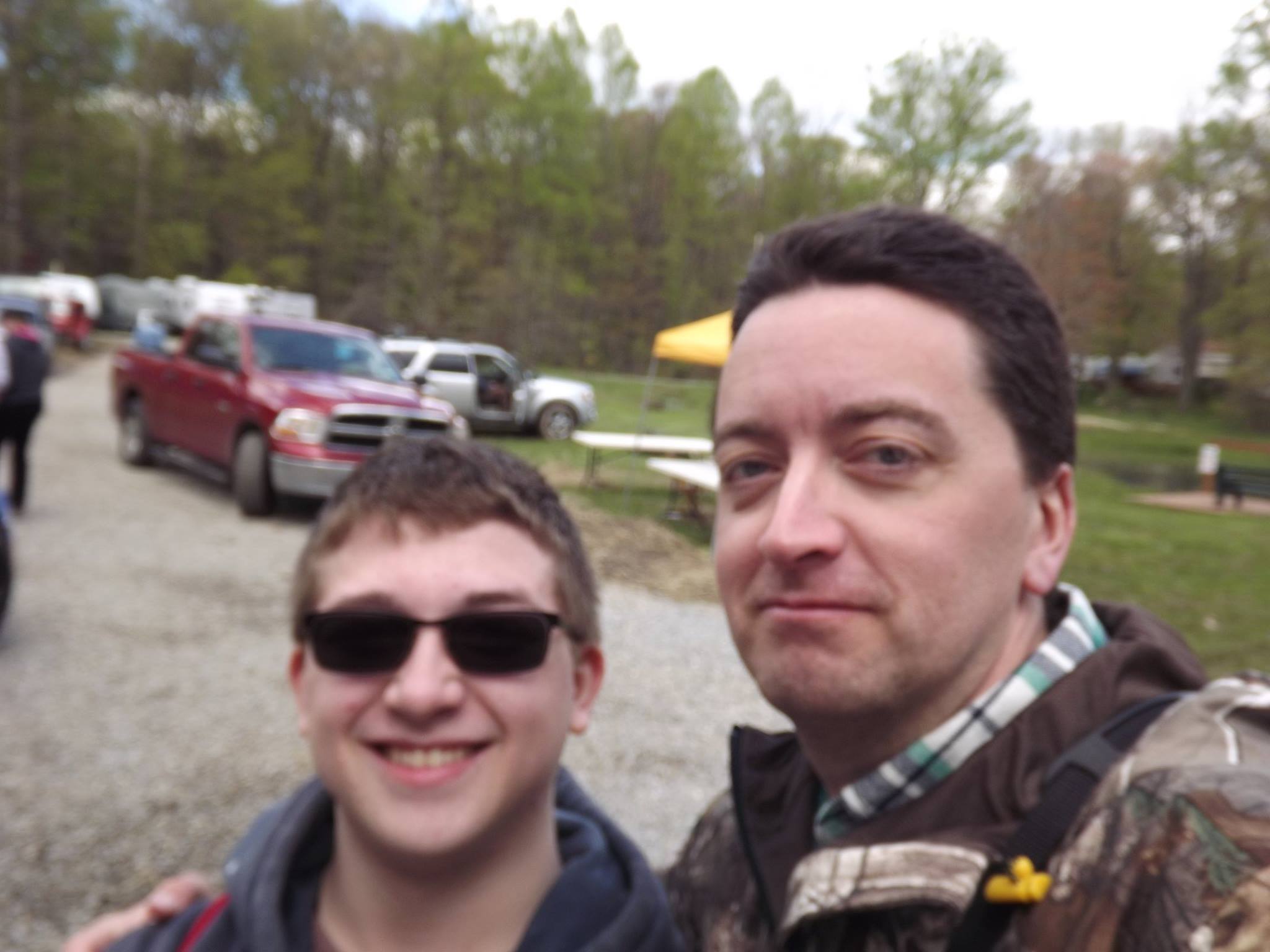
Brian and myself at the 2017 PA Bigfoot Camping Adventure

Tuesday, May 25, 2021

The Changing Perspectives of Cryptozoology Part 3: Sharon A. Hill

    For years, I have been fascinated in the evolution of cryptozoological thought. There are clear fractures happening in the field, but I don't really see a ton of discussion about it in public. Yet, I have had plenty of personal conversations with a variety of researchers about the changes. So, I decided it would be valuable to the field to ask a variety of researchers, all with different approaches and expertise, the same five questions about the field today. Hopefully, the differences in answers will be valuable information on the diversity of thought in the field.

    My last interview was with the Cryptopunkologist: Kenney Irish. You can read it here. For my third entry, I interviewed Sharon A. Hill. 

    Sharon A. Hill is a geologist with an EdM in Science and the Public. She did her thesis work on the rise of amateur paranormal investigation groups and how they attempt to use science, which was later expanded and published as Scientifical Americans: The Culture of Amateur Paranormal Researchers (2017, McFarland). She continues to study paranormal topics in popular culture and anomalous natural phenomena, particularly relating to animals and geology. She has written for Fortean Times and Skeptical Inquirer as well as published in scholarly journals. Her current projects are SpookyGeology.com and SharonAHill.com

1. What is cryptozoology as you see it?

    Sharon: My most accurate description is that cryptozoology is a social phenomenon where legendary and rumored animals are studied and/or appreciated. Cryptozoology spans such different levels of interests - from serious study to an aesthetic. The current views of cryptids in modern discourse and media has extended the bounds to include all kinds of pop culture “creatures” and strange beings that range from animal to human-like and hybrids in between, with a heavy dose of fantasy and supernatural ideas.

    Cryptozoology is not driven by scientific discourse but by personal stories used in producing media products and by personalities on TV, the internet, podcasts, and at conventions who sell these stories. I don’t believe this was the original intent of the field that was initially set back in the early 1980s. Only a very few now stick to the idea that it’s a scientific subfield of zoology - an outdated view that is untenable in light of the massive popularity of the subject. Those that aim to research cryptids are almost entirely non-scientists who pursue mysteries and hold a belief that unknown animals exist that match these legendary descriptions. Any scientific spin is contrived because it’s not viewed favorably by science. And, recall at its inception, cryptozoology was started as an effort to defy “mainstream” science and find animals that were “hidden” or denied. So, it’s unsurprising that the field never got its bearings. 

    If I were to be wishful, though, I would like the field of cryptozoology to be a multidisciplinary area - using history, art, linguistics, folklore, cultural and religious studies, anthropology, wildlife biology, psychology, and sociology - to examine claims and beliefs of unusual animals that people say exist. The best scholarship in cryptozoology does this, which is useful and fascinating. Attempting to prove the existence of a mystery animal is almost certainly a futile goal. 

2. Where do you think cryptozoology is headed in the next few years?

    Sharon: I’d guess that cryptozoology will continue to be shaped and changed by the media machines. Cryptids - as very interesting and flexible things - will filter more into pop culture. There is a growing interest in “cryptids” as an aesthetic - called “cryptidcore” - where stylized cryptids are used throughout one’s lifestyle. Popularized by the internet, people into cryptidcore romanticize cryptids, and embrace the weird, dark, and mysterious aspects of fantasy and legendary creatures. Link - https://aesthetics.fandom.com/wiki/Cryptidcore.

    Some self-styled cryptozoologists admit their interest is an escape from the every-day world. It’s exciting to entertain ideas that cryptids may exist and they can be the ones to discover them. Perhaps cryptidcore is a cuter, more consumer-oriented way to do that. 

    Cryptozoology long escaped the bounds to which the ISC tried to hold it. While the zoological takes are nonstarters anymore, I think we’ll see more historical, anthropological, and folklore takes on cryptid origins and popularity.

    The subject thrives in any modern medium so I’m sure it will continue to grow in popularity for many years. More fantastic and paranormal elements will surface. For example, we should note the growth in crypto-fiction, cryptids as movie topics, and the very fan-oriented, non-technical cryptid conventions with plenty of merch and movie screenings. People love the idea of monsters and we enjoy talking about weird animals and scary encounters. That will continue in these new forms and forms yet to evolve.

3. Who do you think (living or deceased) has had the biggest impact on the state of cryptozoology in today's world?

    Sharon: The key to that question is “today’s world”. While Heuvelmans was there at the start, his influence is fading because today’s participants are too young to remember the 70s and 80s. They learn from internet sources and not so much from reading the older books or going back to the source ideas.

    I would say the greatest impact was from those who capitalized on the media, and who built a popular reputation - Doug Hajicek of Monster Quest and Loren Coleman, for example. Scholars of the paranormal will say John Keel because he placed reports of mysterious creatures clearly outside of zoology and made them “strange”. The Keelian resurgence is on. We see his influence today in the paranormal descriptions of dogman, Bigfoot coming out of portals, bulletproof wolves of Skinwalker ranch, and, of course, the popularity of Mothman.

    I would honestly say, however, that it’s not a person who had the biggest impact, but a thing - the internet has turbo-charged cryptozoology in modern culture beginning with the chupacabra, through to the rake and the dogman. Bigfoot and other cryptids were reinvented and are all over -  more popular than ever. 

4. What, if any, have been cryptozoology's biggest contributions to modern science?

    Sharon: It is telling that cryptozoologists’ best examples of cryptid contributions have come long before the term was coined. Very few examples come after, and those are weak. The big prizes  - hairy hominids, lake monsters, bizarre-looking beasts - were never attained. I say there are, as of now, no contributions from cryptozoology regarding discovery of mystery animals. Others, who define the field very broadly, will say differently and will tout modern new species announcements as contributions. It’s incorrect to credit modern new species finds to cryptozoological methodology because they were done via application of existing, established zoological techniques. I think it is specious to call cryptozoology a special subfield of zoology when so few self-styled cryptozoologists are zoologists and the consensus of zoologists do not apply the term to their work.  

    Looking back at 50 years of cryptozoological research, there remains only anecdotes and eyewitness accounts, footprints or ambiguous traces, and blurry visuals. The technology is monumentally more sophisticated but the evidence for cryptids remains no better and the predictions for finding them have all, so far, failed. 

    I do not, however, think the field is useless or that it has to remain unscientific or pseudoscientific. Many who are interested in cryptozoology are fascinated by animals and interested in wildlife and habitat conservation. It is great fun and worthwhile to put out game cameras or collect other data to document wildlife. I have heard more Bigfooters and lake creature enthusiasts talk about citizen science, which is a valuable thing. Science enthusiasm is really encouraging to see. However, science doesn’t happen via one person. It must be organized and run by people who are knowledgable about research methods, data collection, and analysis. That is, amateur contributions should be provided to the experts who then pull it together and publish. It’s a process and a team effort. That’s still how science works to produce reliable knowledge. Aimless amateur expeditions are a waste. A YouTube video of your FLIR recordings, casts of footprints, rampant speculation, or more questionable pictures won’t contribute anything meaningful to society.

5. Why do you think that paranormal and ufological subjects have been gaining traction within the field of cryptozoology?

    Sharon: There are many reasons for this. One is, as I previous mentioned, the internet, that makes it easy for anyone with a fringe idea to find support and promote it in this limitless marketplace of ideas. Related to that, there has been a breakdown of the structure of expertise. Anyone can call themselves an expert with the poorest of credentials. There is a lack of critical thinking applied to what appears to be factual information. We assume that if we see it on the news, it must have some truth to it. But, mostly there are two main reasons that play heavily into the paranormal trend of cryptozoology.

    Paranormal claims are undergoing a resurgence for complex sociological reasons since 2000. This is happening in ufology for similar but additional reasons (such as conspiracies based on government distrust and technological fears). So, generally, belief in weird things is more popular and that has bled over into cryptids. There is plenty of oxygen in the paranormal community to feed new and fun ideas about strange creatures these days. 

    I think the specific reason that modern cryptozoology has been lost to paranormal and supernatural thinking is the need for people to sustain their beliefs. I’ve previously called cryptids “paranormal” because I argue they don’t behave like normal animals or they would have been discovered by now. Instead they have supranormal characteristics such as hiding, not leaving a discernible biological signal, surviving in small population numbers, and “powers” to stun, cause fear, use psychic communication or to just disappear instantly. They also have been successful at evading photography and video recording. Many people describe cryptids in very non-biological terms (lizard man, dog man, etc.) When that is what the witnesses describe, science fails entirely to address these aspects. So, there is a stark choice to make - the animals are zoological/the witness was mistaken, or the witness was correct/creatures are paranormal. Psychology research repeatedly demonstrated that people have a very hard time rejecting their beliefs, especially if they were formed from experiences, therefore, they adopt fantastical explanations for them. 

    We have a multitude of modern examples of this human trait hitting us in the face every day. Any strange idea will find support and get attention. There is a disturbing modern feedback mechanism that pushes views towards the extreme ends. Through media, these extreme views are normalized. Cryptids travel through inter-dimensional portals, or are conjured, or are of non-earthly origin. These concepts are obviously appealing to many these days. They want the world to be enchanted. They want magical mystery creatures to be real. It will take a major reset to change this trajectory since it affects many cultural frames, including cryptozoology.


Friday, May 21, 2021

The Changing Perspectives of Cryptozoology Part 2: Kenney Irish

    For years, I have been fascinated in the evolution of cryptozoological thought. There are clear fractures happening in the field, but I don't really see a ton of discussion about it in public. Yet, I have had plenty of personal conversations with a variety of researchers about the changes. So, I decided it would be valuable to the field to ask a variety of researchers, all with different approaches and expertise, the same five questions about the field today. Hopefully, the differences in answers will be valuable information on the diversity of thought in the field.

    My first interview in the series was with the Crypto-Guru himself: Ronald Murphy. You can read that interview here.

    Kenney Irish aka the "Cryptopunkologist" is a cryptid researcher located in New York. His most recent book, American Cryptids, has topped the Amazon ranking for its genre. He often works with the New York Bigfoot Society and has appeared on numerous podcasts and radio shows. You can find him at www.kwirish.com

1. What is cryptozoology as you see it?

Kenney: Cryptozoology was first presented to me as a study/research regarding the possible existence of a species that has not been categorized and recognized by means of traditional science and practices. When we first learn of Cryptozoology, in most cases it is presented via some elusive land beast or aquatic serpentine creature. Individuals who claim the title, seek answers using some means of practical sciences, along with studies in Native American folklore. There are a select few that carry the title, that also seek out to prove certain animals that are said to be extinct, still roam the land, and seas to this day.

2. Where do you think cryptozoology is headed in the next few years?

Kenney: With the subject becoming increasingly popular, and not requiring or needing any type of education, I see it becoming increasingly congested and reckless. Personally, at some point I long to see some form of actual, and recognized educational training presented using both science and history via some university type establishment.

3. Who do you think (living or deceased) has had the biggest impact on the state of cryptozoology in today's world?

Kenney: My answer is short and direct, anyone who studies the subject and “does not” draw a line in the sand based off one’s own opinion, theory, or feelings. This subject currently holds no accountability regarding truth. The individuals who are open to communication are the ones who serve with making the biggest impact to the subject.

4. What, if any, have been cryptozoology's biggest contributions to modern science?

Kenney: Cryptozoology in many ways has challenged traditional thinking and science, and really pushes the envelope. It has brought to light many strange, and unexplained occurrences that in the past was swept under the rug, and or laughed at. Over the years, it has also to a degree, faded the stigma and moved the line drawn in the sand, between scientists that are faithful to practical science, and the science professionals who are intrigued, and believe there is something to the phenomenon.

5. Why do you think that paranormal and ufological subjects have been gaining traction within the field of cryptozoology?

Kenney: With the countless eyewitnesses across the globe, varying in encounter description, it is not easy to believe that something of a “flesh and blood” being could elude most cameras and current modern-day technology. Also, it gives a “reason” why. Which for some individuals, this helps them explain with confidence what they don’t understand or can explain. While others claim to have seen something of a Sasquatch description vanish before their very eyes, others claim to have seen such a creature walking out of what they believed to be an extraterrestrial space craft, or in the area of the craft.


Thursday, May 13, 2021

The Changing Perspectives of Cryptozoology Part 1: Ronald Murphy

For years, I have been fascinated in the evolution of cryptozoological thought. There are clear fractures happening in the field, but I don't really see a ton of discussion about it in public. Yet, I have had plenty of personal conversations with a variety of researchers about the changes. So, I decided it would be valuable to the field to ask a variety of researchers, all with different approaches and expertise, the same five questions about the field today. Hopefully, the differences in answers will be valuable information on the diversity of thought in the field. My first interview was with my close friend, the Crypto-Guru himself: Ronald Murphy. 

Ronald Murphy has been involved in cryptozoology for over 30 years. Much of his research has been focused on the historical and mythical archetypes of cryptids, a topic which he has written a whole host of books on. He is also a prominent researcher into the fortean hot spot of the Chestnut Ridge in Eastern Pennsylvania. 

1. What is cryptozoology as you see it?

Ron: The study of unknown animals. Now this doesn't have to be as sensational as looking for bigfoot or the Loch Ness monster. In fact, I'm quite interested on sighting of animal that are considered extinct being seen in areas where the once inhabited. The Eastern cougar in Pennsylvania, for instance. Cryptozoology is far more akin to biology than the paranormal. 

2. Where do you think cryptozoology is headed in the next few years?

Ron: I would like to see the subject offered as a course in mainstream academia but my fear is so many television personalities refer to themselves as cryptozoologists that there will never be a serious approach to such a fringe discipline. Unless, of course, a self-declared cryptozoologist finds something!

3. Who do you think (living or deceased) has had the biggest impact on the state of cryptozoology in today's world?

Ron: Heuvelmans without a doubt. He is the progenitor of this discipline 

4. What, if any, have been cryptozoology's biggest contributions to modern science?

Ron: Great question! I have to say that no one who is called a cryptozoologist has really impacted the scientific field with a discovery. Science demands facts. That is the cold, hard realization. Unless the scientific method is applied I truly don't believe and unknown creature will be uncovered unless by happenstance. 

5. Why do you think that paranormal and ufological subjects have been gaining traction within the field of cryptozoology?

Ron: Another great question. For lack of proof of the existence of bigfoot for nearly 70 years of searching, it is easy to throw up your hands and declare "it's not of this planet" or "it is interdimensional." It is a copout. Also, it is a sensational story that sells books and television programming. I find the conjecture fascinating to be honest. It is part of myth-building. But again we need proof and not simply a blanket apology of "aliens."

Ron and myself at a conference in 2016.


Sunday, May 9, 2021

A Return

 Around two years ago, after I graduated high school, I decided to step away from the fields of cryptozoology, ufology, the paranormal, and general forteana for a while. I had been struggling with fostering any interest in the subjects for several months prior. I was struggling with any concept for the future for myself at all. I lost interest in writing, I lost interest in reading. I really don't want to go into the why. 

I decided to take a gap year. From school and from the unexplained in general. I got a couple jobs and started getting more into a secondary hobby of mine: comic books. Every now and then, I would feel a need to pull out a couple books and bookmarked links spend a few days reading up on what was current in the fields of the strange. In particular, my interest in mystery cats, dogs, bears, and other members of Carnivora has largely stuck with me. 

Last year I began a project that slowly turned into the rough outline of an encyclopedia examining mystery Carnivoran stories and legends around the world. I made a big announcement on Facebook that I am putting the project together, got a lot of support, and then abandoned the project after a month of working on it. I have picked that project up again and have decided to dip my toes back into the paranormal and unexplained in general. I feel that I am in a much healthier headspace than I was two years ago and even last year.

So I guess that's what this is, an official return. 

But, I am not really the same Crypto-Kid that many of you were familiar with. I have shifted to a much more skeptical mindset and research methodology. I am also not terribly interested in being a "cryptozoologist" or "paranormal investigator" or any one of the other numerous monikers I've attached to myself. I am Colin Schneider. I have an interest in strange things. That is as much as I am comfortable putting out there anymore. I will keep the Crypto-Kid title of the blog, mostly out of nostalgia. 

Going forward, I have a few smaller projects I would like to do on the blog, as well as keep updates going about where I am in my research. To those of you who have followed me since this blog was active, I thank you and I hope you will continue to support my work going forward during this metamorphosis. 

Wednesday, December 7, 2016

Wildmen, Dinosaurs, and Legend Tripping: My Six Favorite Books from This Year

This year has had some fantastic new releases from sone of the best crypto-authors out there. Here is a roundup review of my six favorite books from this year in no particular order. 

On Wildman: Tracking Bigfoot Through History by Ronald L. Murphy Jr. 

As I stated in my previous review of On Wildman, Ron's excellent study of Bigfoot throughout history is a treat for anyone interested in Bigfoot, mythology, or cryptozoology in general. 

A Menagerie of Mysterious Beasts: Encounters with Cryptid Creatures by Ken Gerhard

Ken Gerhard's takes his readers on a global adventure in his third solo book; A Menagerie of Mysterious Beasts. Ken covers nearly every kind of creature you could imagine; Ape-Men; Dogmen; black panthers; sea serpents; Thunderbirds; and even giant spiders. Menagerie is written in Ken's no-nonsense tone but doesn't lack any bit of excitement or strangeness.

I especially liked that Ken strayed away from the well known and popular cases and creatures. He examines some of the weirdest stuff you will ever find in a cryptid book... and that's saying something. 

Beyond the Seventh Gate: Exploring Toad Road, the Seven Gates of Hell, and Other Strangeness in York, Lancaster, and Adams Counties by Timothy Renner

When Timothy Renner first heard "don't look behind you on Toad Road," instead of just shrugging off the strange superstition, he questioned why. From there, he went through a long and weird journey not only on Toad Road but on some others as well. Are there really Seven Gates of Hell in York county? What is an Albatwitch? And, why shouldn't you look behind you on Toad Road? Find out in Timothy's excellent investigation into the truth behind the legends.

This book is an excellent example of cryptid/unexplained investigation done right. Timothy looks into any and all possibilities into the handful of urban legends and folklore that exist within York, Adams, and Lancaster Counties. I read this book in one sitting, it was THAT good. 

Legend Tripping: The Ultimate Adventure by Robert C. Robinson

Legend tripping: (Noun) to go or participate on a quest or adventure for something which has defined a mystery or legend and not verified or explained by science. In his highly detailed guide into how to begin legend tripping, Robert Robinson goes above and beyond that definition. He gives brief explanations of popular legends, how to perform a trip, and how to have fun doing it. He examines all kinds of legend trips including cryptid, paranormal, and UFO trips. Robert also tells stories about some legend trips he has been on.

This book is for both the novice and experienced in any kind of legend tripping field. The book is an entertaining read for anyone interested in the stranger side of the world. 

Still in Search of Prehistoric Survivors: The Creatures that Time Forgot by Karl P. N. Shuker

In 1995, Karl Shuker released what many agree to be his greatest work; In Search of Prehistoric Survivors. The book soon went out of print and became a much-sought-after piece. Finally, after 21 years of waiting, Shuker has released an updated version of the book. Considering the fact that I loved the first one, it was a given that I would also love the revised edition.

One of the many things that made Shuker's work unique — besides it being the only book of its kind — is the careful examination that he goes through of each potential survivor. He also doesn't only look at extinct animals for possible explanations. Shuker presents a truly balanced piece of cryptozoological writing that deserves a place on everyone's shelf. 

Nessie: Exploring the Supernatural Origins of the Loch Ness Monster by Nick Redfern

As I've stated before, Nick Redfern never ceases to disappoint me with his work; I love his Chupacabra Road Trip, Monster Book, and everything in between, but this book was special. From the moment it was announced, I knew I HAD to have it. When I finally did get it at the Mothman Festival, I stayed up all night reading in the hotel bathroom so I didn't wake my father. I've always been interested in the Loch Ness Monster but had never been convinced that there was anything actually there; this book changed that for me.

Nick goes through the extensive history of the Loch Ness Monster, looking at not only modern sightings and evidence but also ancient legends such as the kelpie or Nessie's encounter with a Saint. I loved this book and if you like lake monsters, you will too!

Thursday, September 29, 2016

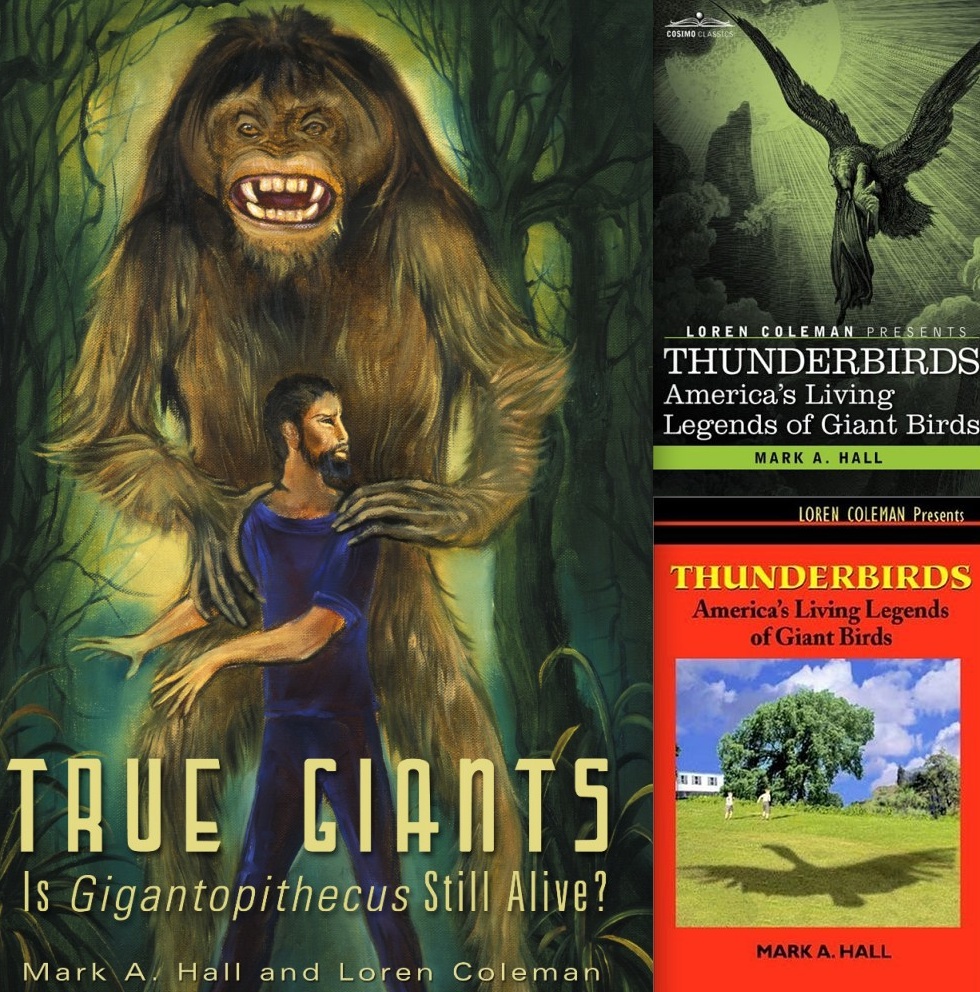
Mark A. Hall: One of the Greats

It seems too often these days the cryptozoological community is effected by the passing of one of our own: Smokey Crabtree passed in January of this year, Rob Riggs passed in November of last year, and the Sasquatch Chronicler, John Green, passed in June. There were unfortnuately many more. I never got the chance to meet any of these three gentlemen, but their passing effected my anyway, if only as a kid who was influenced by their works and hopes to one day be lucky enough to stand atop the shoulders of the cryptozoological giants they truly were.
We have, unfortunately, lost another one of the greats; Mark A. Hall.
Despite the fact that I never met Hall, he still greatly effected my life and how I came up into the field, cautious but also open minded. I remember reading Hall's works when I was still in grade school; he was a huge influence on my development as a researcher as well. His research and books all fascinated me and intrigued me.
Loren Coleman, in his lovely obituary to the life and research of Hall, said, "it may be years before the younger researchers realize what a loss this is..." Trust me, Loren, I realize.
Hall was always a groundbreaker in the field, exploring new or largely ignored ideas and topics or shedding new light on well established topics. The field will never be the same without him.

MarkHall

Tuesday, June 28, 2016

Book Review: Nick Redfern's Chupacabra Road Trip

I am a frequent reader, I've read close to 500 books on the paranormal, cryptozoology, ufology, and other topics of high-strangeness. Every once and a while I pick up a book that will change my entire point of view on a certain topic. An example was Mothman Prophecies by John Keel. Another was Chupacabra Road Trip by Nick Redfern.
I have been reading Redfern's books since I initially got interested in the unexplained. I have always loved his writing and how each book he writes is significant to the subject. Chupacabra Road Trip was even more than that. It convinced me that there is more the the Chupacabra mystery than just coyotes with mange and mass hysteria. 
In Chupacabra Road Trip, Redfern leads us along as he explores the misty jungles of Puerto Rico, examines the strange looking corpses of hairless canines, and even gets peed on by a bat!
The book is filled with fascinating information about the Chupacabra, much of which has never been explored before. Redfern leaves no stone unturned as he investigates every aspect of the goat-sucker, examining ever possible aspect with his unique sense of humor. 

Chupacabra Road Trip is a journey that anyone interested in the truth about the goat-sucker of Puerto Rico and hairless dog of Texas should absolutely love. You can buy the book here


(On a side note, I will be down in Mississippi for the next week. After that I will be going to Harrisburg, PA for a long weekend. Because of this, I will be unable to put anything up on the blog for the next two weeks. I will be doing some paranormal related stuff so I will make sure to write about that when I get back.)

Wednesday, June 22, 2016

Book Update

I am changing my focus for my upcoming book. I decided instead of rewriting the same cases that everyone knows, I want to contribute something specific to the field.
Because of this, I have adjusted the focus of my book to looking at paranormal aspects of cryptids.

I have a great interest in the 'fringe' ideas about unknown animals. Here is the list of the chapters I will have as of right now:


  • UFOs
    • this will be to explore the idea of a connection between UFOs and cryptids; specifically Bigfoot, flying humanoids, and lake monsters
  • Extraterrestrials
    • this will be to explore the idea that some cryptids are extraterrestrial in nature: specifically Bigfoot and the chupacabra
  • Lover's Lanes
    • this will look at popular Lover's Lane cryptids such as Bigfoot, Goatman, Mothman, and Owlman
  • Earth Energies
    • this will explore the idea that cryptids have connections with 'earth energies' which would include subjects such as ley lines and powerful places (stone circles, graveyards, etc.)
  • Psychic
    • this will look at the idea that some cryptids have a psychic aspect such as Bigfoot, flying humanoids, and black dogs
  • Fairies
    • this will look at the possible connection between fairies and cryptids
  • Tulpas
    • this will look at the idea that cryptids are thought-forms created through the power of the mind
  • Ultraterrestrials
    • this will look at John Keel's idea of multi-dimensional beings (this chapter will also discuss the djinn)
  • Where does this leave cryptozoology?
    • this will discuss what will happen to cryptozoology if these creatures really aren't unknown animals

If you have any suggestions for inclusions in the book, let me know in the comments!

Monday, June 13, 2016

Future Projects

I have four projects I am currently working on, all four of which should be completed by the end of the year.

The first project is mostly done, there is just some revisions and adjustments left. The project is a regional listing and evaluation of various diminutive humanoids. Essentially it is a directory of dwarves. I will put the directory on the Kindle Store as an ebook sometime in the future.

The second project ties into the third one; I am writing a book about the history of fortean, paranormal, and occult within the last two centuries. I am hoping it will be out by September but I am unsure.

The third project ties into the second because it is a card game which focuses on important paranormal events. More about that to be announced.

I run the paranormal club at my school. We are currently in the works of planning a paranormal conference to raise funds and to generate some cases. Again, more about that to be announced.

If you have any questions about the projects, email me or comment.

Thursday, June 9, 2016

Minerva Monster Documentary Review

I recently went to the wonderful event, Creature Weekend, and while I was there I got a chance to meet the producer and director of a documentary which has become very popular, Minerva Monster. The documentary was made by a team known as Small Town Monsters, who also have a documentary on the Beast of Whitehall.
I was excited about getting the documentary because I live about 45 minutes away from Minerva and when I began to be interested in cryptozoology, the Minerva Monster was one of the first creatures I looked into.
I was not disappointed. The documentary was level headed, open minded, and was very respectful of the witnesses. It was similar to any documentary on a small town and an important event within the town. It reminded my of one of Lyle Blackburn's books except in a documentary format.
I especially liked that the team treated the event as history, which it is.

Overall, Minerva Monster is a great examination of a small town and its claim to cryptozoological fame. I recommend this to anyone who lives in Ohio and to anyone who is interesting in cryptozoology.


Thursday, June 2, 2016

Creature Weekend is soon!

I try to go to as many paranormal conferences as I can. I have gone to two MUFON conferences, the Mothman Festival, and the Butler Paranormal Conference. I love meeting all the different researchers and witnesses, having discussions, buying books, and attending talks on a wide range of topics within the weird. This weekend has an upcoming event which I have anxiously looked forward to since I had heard about it.
So what is the long awaited event? Creature Weekend.
Creature Weekend is a chance for lovers of cryptids and monsters to meet, talk, hang out, and learn lots about every creature you can think of.

This year has an awesome set of speakers;
Ron Murphy... Ron is a really good friend of mine, he is an expert on fairies and is a seasoned cryptid researcher. He has numerous crypto-focused books, all of which are highly, highly recommended.
Ken Gerhard... Ken is an awesome researcher who always brings something new to the table with each of his books. He is a great guy who is really cool to hang out with.
Ron Morehead... Ron is a seasoned Bigfoot researcher. He is best known for his astonishing recording of supposed Bigfoot vocalizations, known as the Sierra Sounds.

The Center for Cryptozoological Studies will also be there, Brian Seech is always fun to talk to.


Needless to say, this will be an awesome weekend.
I cannot wait. I will write a short post about the event when I get back.
You can find information on the event here.


Friday, May 27, 2016

Favorite Websites

I wanted to write a quick post about some of my favorite paranormal, cryptozoology, or just plain weird websites. So, without further ado, here is a list of my top five favorite unexplained themed websites.

1. Phantoms and Monsters
Run by fellow blogger and researcher Lon Strickler, Phantoms and Monsters is probably one of the biggest paranormal blogs out there. Lon often posts multiple times everyday on subjects that cover every aspect of the weird. Great resource to keep around.

2. Unexplained Mysteries
Unexplained Mysteries is a new source, an encyclopedia, and a forum of the strange. Think of anything weird and it is likely somewhere on Unexplained Mysteries. It has a huge amount of forum members discussing everything from the latest Bigfoot sighting to the most recent SpaceX launch.

3. Stan Gordon's UFO Anomalies Zone
Stan Gordon is a veteran UFO and Bigfoot research, he has been working in the field for over 50 years. Stan is based in Pennsylvania, so most of the information on his website is about PA occurrences but all of them are fascinating and odd.

4. Nick Redfern's World of Whatever...
Nick Redfern is a dedicated UFO, cryptid, and Fortean researcher who is also a very prolific author of books and articles. Redfern updates his blog with new articles written by him on some very obscure and weird phenomena.

5. Tyler's Cryptozoo
Tyler is another kid who is beginning in the cryptozoology field. He has been doing it a little longer than I have. Tyler is a great writer and posts some very interesting blog entries. Definitely check his blog out.

Tuesday, May 24, 2016

New Book by Cryptozoologist and Folklorist Ronald Murphy Jr.!

Ronald Murphy Jr. is a world class expert on fairies, writer, actor, and cryptozoologist extraordinaire.
He has written numerous books, both non-fiction and fictional, including On Dogman, On Mermaids, and The Unexplained World of the Chestnut Ridge.
Ron is a seasoned researcher with cryptozoological and folkloric subject. He has done extensive research for all of his books and all are extremely well written and detailed.
I am glad to call Ron my friend and associate, he has done much for the subject.

He has come out with a new book!
On Wildman: Tracking Bigfoot Through History
On Wildman is his third book in his 'On' series where he examines the cultural and mythological origins of well known figures in cryptozoology. His other two were about Mermaids and Dogman.

I ordered his new book last night and cannot wait until it comes. After I read through, I will do a review as well.

I highly recommend anything Ron has written. You can find his website here and his new book here.


Saturday, May 21, 2016

Interview With Stan Gordon


Stan Gordon is a seasoned ufologist and cryptozoologist who has worked in the field since 1965. He has three books, The Silent Invasion: The Pennsylvania UFO-Bigfoot Casebook, Really Mysterious Pennsylvania, and Astonishing Encounters: Pennsylvania’s Unknown Creatures. He is widely considered to be the foremost authority on paranormal phenomena in Pennsylvania as well as the Kecksburg UFO crash. I met Stan over Labor Day weekend where he agreed to this interview, and again at the recent Mothman Festival, which I will be posting a summary and review of as my next post.

1. What originally inspired you to research the paranormal? How long have you been doing this?
>I was a curious youngster who had an interest in science and electronics at an early age.  By coincidence my birthday is around Halloween. In 1959, on my 10th birthday, my parents gave me an AM radio as a gift. That evening as I tuned across the radio dial, some radio shows were discussing strange events such as ghosts and flying saucers. I listened to the discussions, and while intrigued I was also skeptical of some of what I was hearing. I wanted to learn more and began many trips to the Greensburg library to read what books they had on these topics. I continued my interest and research making scrap books from news stories that appeared on these subjects.  I was 16 years old in December of 1965, when a major UFO incident occurred in a rural community called Kecksburg, about 12 miles away from where I lived.

That night as the news was breaking from around the Pittsburgh area of the UFO incident, I began to take down notes. The next day as the story appeared in local newspapers, I began to call people in the area where the incident occurred to try to obtain more details. This year will mark 50 years of my investigation into the case.

That UFO incident still remains unsolved. I have been out in the field conducting first hand investigations in the UFO phenomena and many other areas of what would be described as paranormal. In the nearly 56 years that I have been conducting this research, I have still never seen a UFO or crossed paths with Bigfoot. The thousands of witnesses I have interviewed and the physical evidence that I have seen has convinced me, however, that there remain many mysteries in this world for which we have no answers.

2. Of all the cases you have investigated, what is, in your opinion, the most significant and why?
>This is a tough question to answer as there are multitudes of UFO and Cryptid cases that I have investigated that are significant.  The case that stands out was an incident that occurred during the major UFO-Bigfoot wave of 1973. It is very involved and well documented, so I am just giving you a brief summary.  On the evening of October 25, 1973, I received a call from a state trooper from the Uniontown barracks in Fayette County, Pennsylvania. He had returned from investigating a strange incident on a farm and felt that I should send a research team to that area immediately.

About 9 PM that evening, a number of local residents observed a barn sized red sphere hovering about 100 feet in sky and dropping towards the ground. Three people went up to the pasture to investigate. They were shocked to see about 250 feet away that the object was on the ground or hovering just above it. The object now looked to be a bright white dome shape about 100 feet or more in diameter. It illuminated the area and made a loud whining sound. About 75 feet away from the observers was a barbed wire fence. Along that fence were two huge hair covered creatures with very long arms walking in their direction.

As one man fired ammunition at the beasts with a 30.06 rifle, the object suddenly just vanished, and the creatures being hit with ammo just kept walking back towards the direction from which they came with no apparent effect. The state trooper who arrived within the hour to investigate, said the area where the object had been was glowing and the farm animals would not go near it. When my team arrived during the early morning hours to investigate, some strange events took place in that area. I explain the entire case in detail in my “Silent Invasion” book. It was the case that clearly indicated that the Bigfoot and UFO phenomena is much more complex than any of us were aware of.

3. Are your files and research  concentrated simply to Pennsylvania, or have they branched out further?
>While I am interested in similar cases from surrounding states and what takes place elsewhere, my focus has been to document what has been taking place in Pennsylvania. The Keystone state has a long history of mysterious happenings, and these strange encounters continue to take place each year. This year has been very active with UFO, cryptid and other anomalistic incidents.

4. Your second book, The Silent Invasion: The Pennsylvania UFO-Bigfoot Casebook, focuses on a wave of sightings during the seventies where Bigfoot and UFO sightings seemed to be connected, do you have any theories as to what the connection might be based on the various encounters? Do you feel that all Bigfoot sightings are connected to UFOs?
>The “Silent Invasion” book details the many mysterious events that took place from 1973 into 1974 across Pennsylvania. I began investigating Bigfoot encounters in the late 1960s. I had always felt that the initial information we had indicated that these creatures seemed to be some type of unknown animal. During the wave of the early 1970s, residents were calling the police and my research team reporting many very strange events. Some patterns of the phenomena began to emerge from widespread locations.

Observers would report a UFO sighting in a certain area and within a short time, a Bigfoot encounter would take place there as well. Sometimes it would be the reverse, with a Bigfoot sighting taking place, then a UFO encounter would occur. Then there were cases where a UFO and Bigfoot were seen together at the same time and location.

Most UFO sightings historically reported have no association with a Bigfoot encounter. And most Bigfoot incidents aren’t associated with UFO activity. Such cases of Bigfoot with UFOs  have been reported not just from Pennsylvania, but from throughout the country and other parts of the world. As I have mentioned many times in my writings, I don’t have the answers if there is a direct connection between the two phenomena. The more you look into the UFO and cryptid fields, the more it is apparent that we are dealing with a very strange, and complex phenomena.

I am not suggesting that Bigfoot is an Alien life form and that it is an occupant of a spacecraft from another world. We don’t know for sure what UFOs really are. While many sightings are explainable, some remain unexplained. There are many theories for these objects including extraterrestrial spacecraft, time and interdimensional travelers, even unknown natural phenomena. I don’t have the answers, but I keep an open mind to all possibilities.

5. You seem to, in your books, focus on cryptozoology and ufology, what are your thoughts, if you have any, on some other paranormal subjects, such as ghosts, poltergeists, psychic abilities, fairies, or werewolves?
>During many years of research I had an interest in all types of anomalistic events including most of the topics you have mentioned.  In the late 1960s and early 1970s, I was involved with cases of alleged haunted houses and ghosts. I interviewed many people who claimed to have ESP experiences. I have looked into many types of strange creature and mysterious being encounters including claims of fairies and werewolves, and discussed in my new book, “Astonishing Encounters: Pennsylvania’s Unknown Creatures.”

6. Do you have any advice for anyone who may be starting within the subject of the unusual and unexplained?
>Don’t believe everything that you read and see on the internet. Keep an open mind when researching such cases, but be objective and look for sources that might explain what took place. Associate with trained research professionals such as scientists and engineers, and utilize their expertise when evaluating mysterious claims.

All three of Stan’s books are highly recommended. He can be found here

Thursday, May 19, 2016

Paranormal Terms to Know

Everyone knows the terms “UFO” or “sea serpent”, but some of the other terms I use you may not be so familiar with. Because of this, I have compiled a short list of some terms used often in the fields of paranormal.

  • Flaps- patterns of time, connected to groups of unusual encounters or happenings. Described by Loren Coleman as “an attempt to understand a grouping of reports which cluster in time, and for monster accounts, usually in a specific local.” It is worth noting that nearly all encounters with cryptids (unknown animals) or UFOs come in clusters.
  • Windows- specific places that seem to act as magnets for the unusual. Commonly attributed to cryptids, UFOs, or hauntings. Often window areas serve as locations for multiple types of unusual occurrences.
  • High Strangeness- there are two definitions for this term, first, encounters or reports with unexplained phenomena that seems more unusual than most reports (example, there was once an encounter with a supposed extraterrestrial which apparently gave the witness “space pancakes”). The second definition are areas that seem more unusual than normal window areas, for example, the Bermuda Triangle.
  • Zooforms- literally monsters. Zooforms are technically apparition creatures that resemble animals, but the phenomena seems to include most paranormal creatures, from werewolves to vampires to the bogey-man. It is an extremely vast and complicated phenomena.
  • Name Game- patterns within names of witnesses of the paranormal or names of places where paranormal encounters. Some examples of names within the game are Fayette, Dover, Decatur, and Logan.
  • Waves- similar to flaps, except waves are simply the clusters of sightings while flaps are the patterns within the clusters.

Sources
Mothman and Other Encounters by Loren Coleman
Mysterious America by Loren Coleman
PSIence by Marie D. Jones

Monsters! An A-Z of Zooform Phenomena by Neil Arnold

Thursday, May 12, 2016

How Can Cryptids Stay Hidden?

When discussing cryptids, such as Bigfoot or Mothman, I seem to be faced with the same question, time and time again. This question seems simple but could really be quite complex if you really think about it. The question is, “If these creatures exist, how do they stay hidden against hundreds of people looking for them?”
There are many answers to this question, and which answer you use normally depends on your point of view on the specific cryptid or type of cryptid in question. I will briefly explain the three major answers to the question.
The first answer is nothing more than trying to show that there are still plenty of areas not properly explored by man, or are so vast and inaccessible that it gives large animals a fair amount of living space without needing to stray into more densely populated areas. This is normally used by believers in the specific cryptids existence or at least those who are open to the possibility.
The second is simply that the cryptid doesn’t exist and that sightings are simply nothing more than misidentifications or flatout fabrications. Thus there is no ‘real’ animal to be found. Most professional debunkers use this for nearly everything.
The third answer seems to divulge into the very strange, it can be summed up in two words, multidimensional beings. This idea has seemed to grow in popularity and has a large number of supporters. Basically those who support this idea think that since most cryptid encounters seem to have many paranormal parallels to it, the creatures most likely come from another dimension or something similar. This idea seems more logical for some cryptids but not for most of them.


Sources
Encyclopedia of Cryptozoology by Michael Newton
Cryptozoology A to Z by Loren Coleman and Jerome Clark

The Complete Guide to Mysterious Beings by John A. Keel